
Yashua Klos
Proposal for a Monument
February 12–March 21, 2026
Sikkema Malloy Jenkins is pleased to present Proposal for a Monument, an exhibition of new work by Yashua Klos on view from February 12 through March 21, 2026. Proposal for a Monument marks Klos’s second solo exhibition with Sikkema Malloy Jenkins. The gallery will host an opening reception with the artist on Thursday, February 12, from 6–8pm.
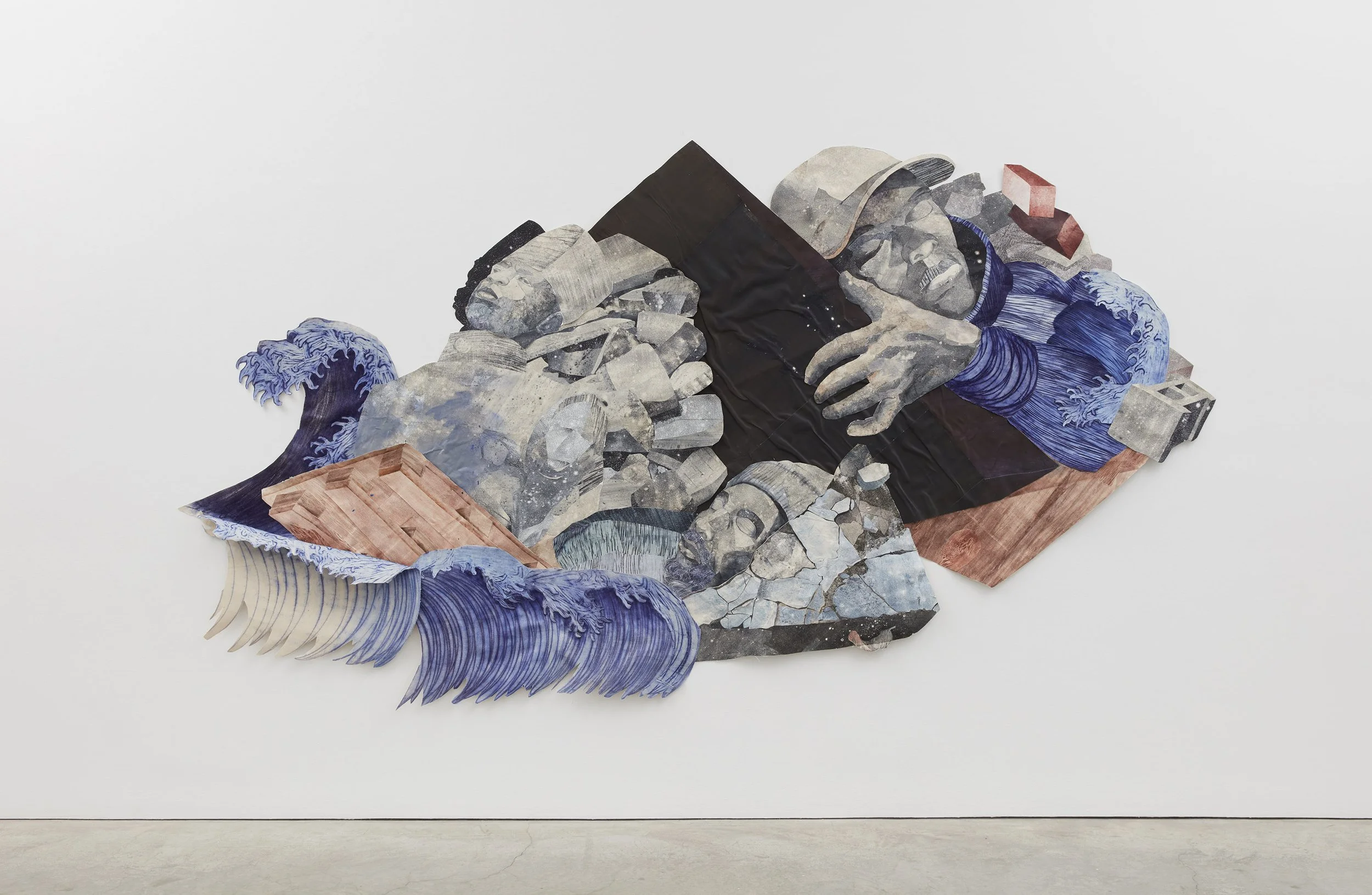
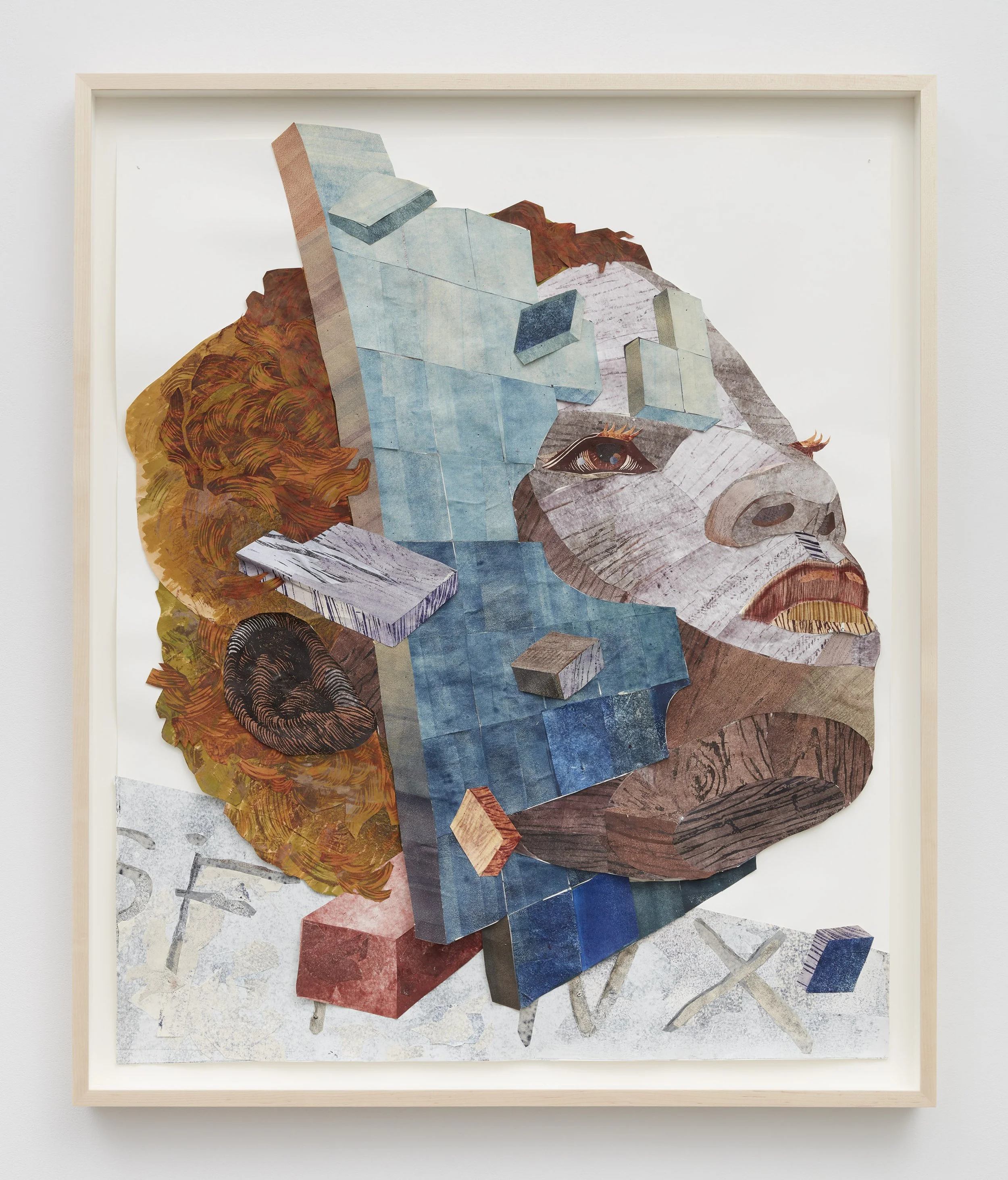
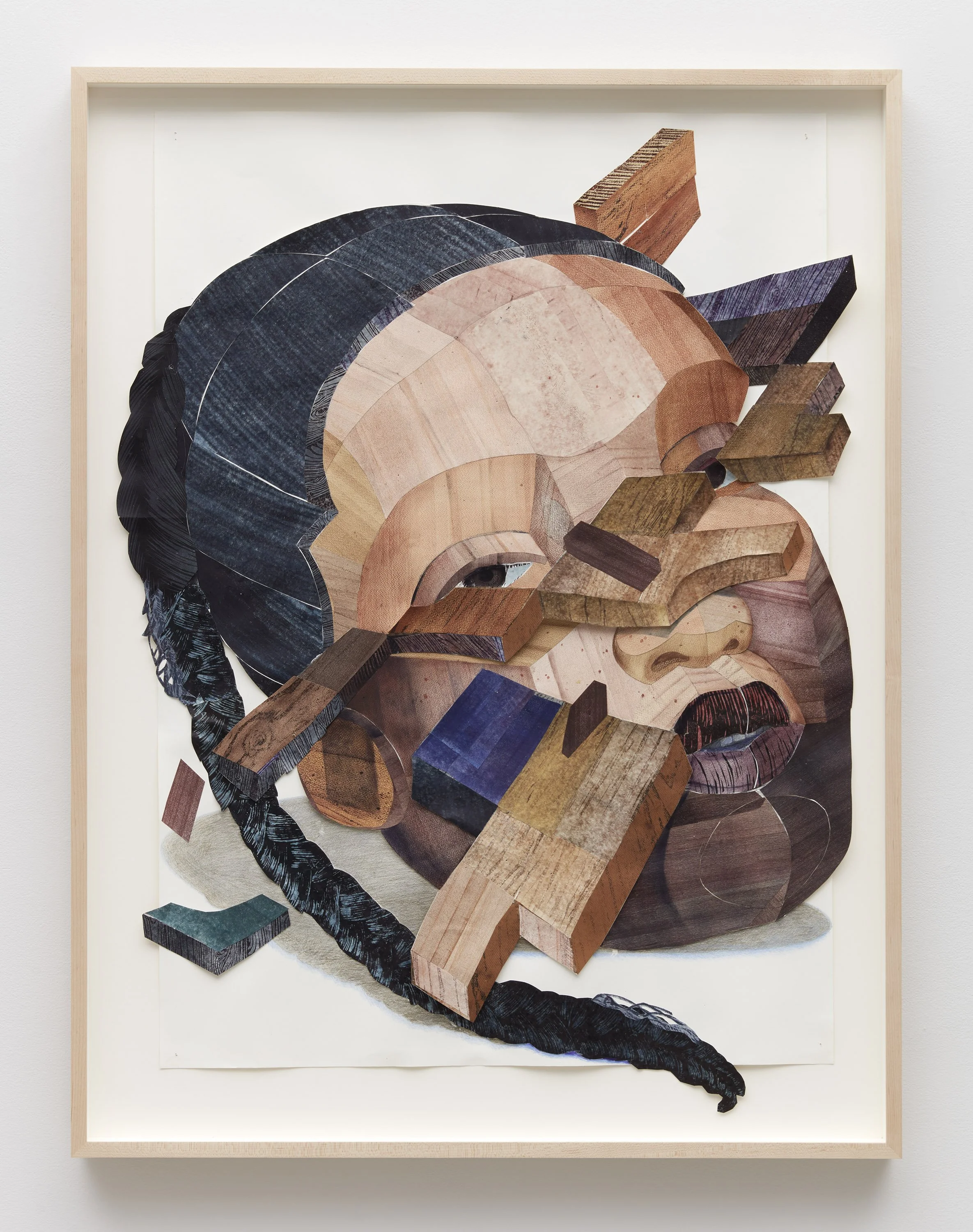
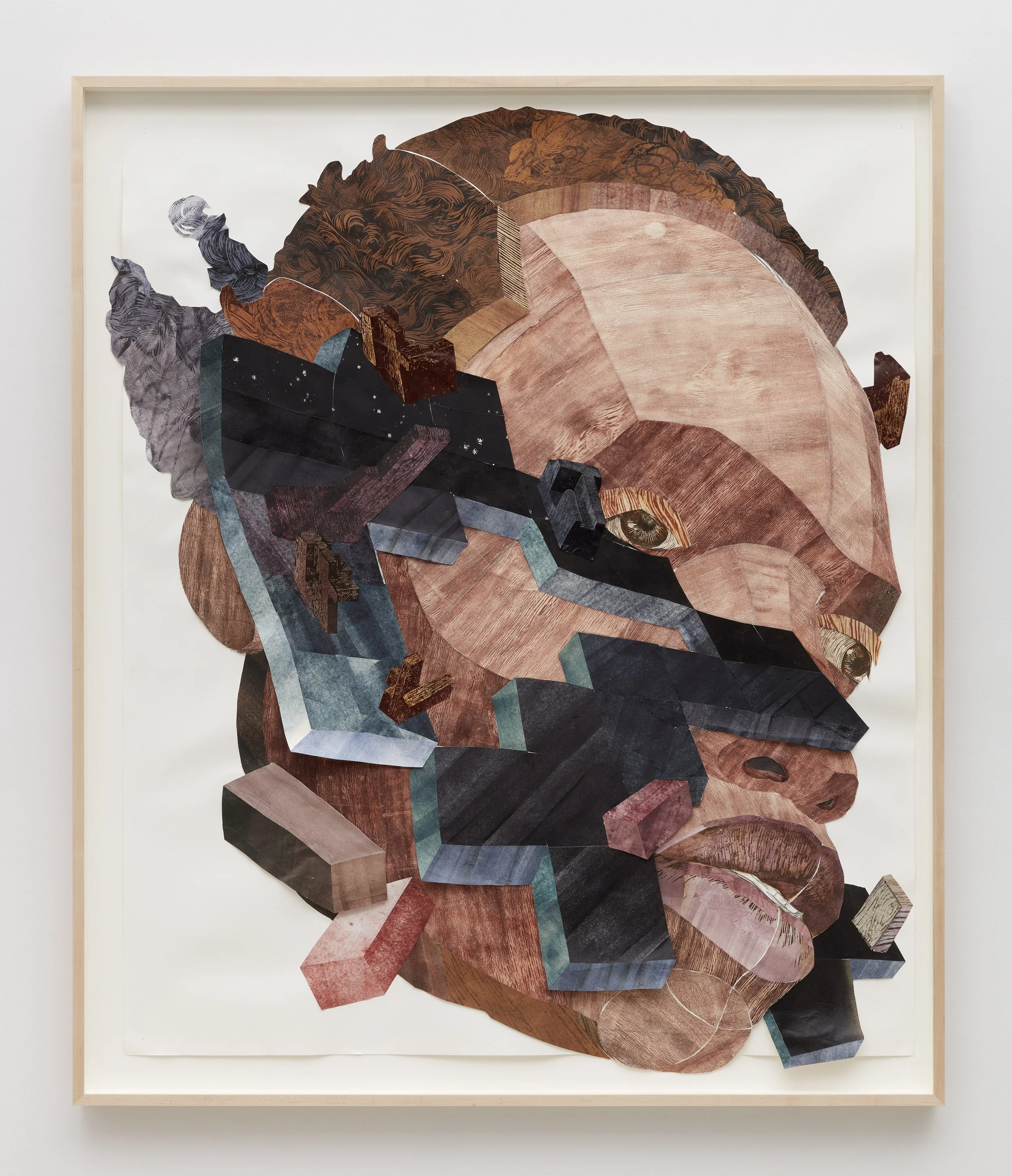
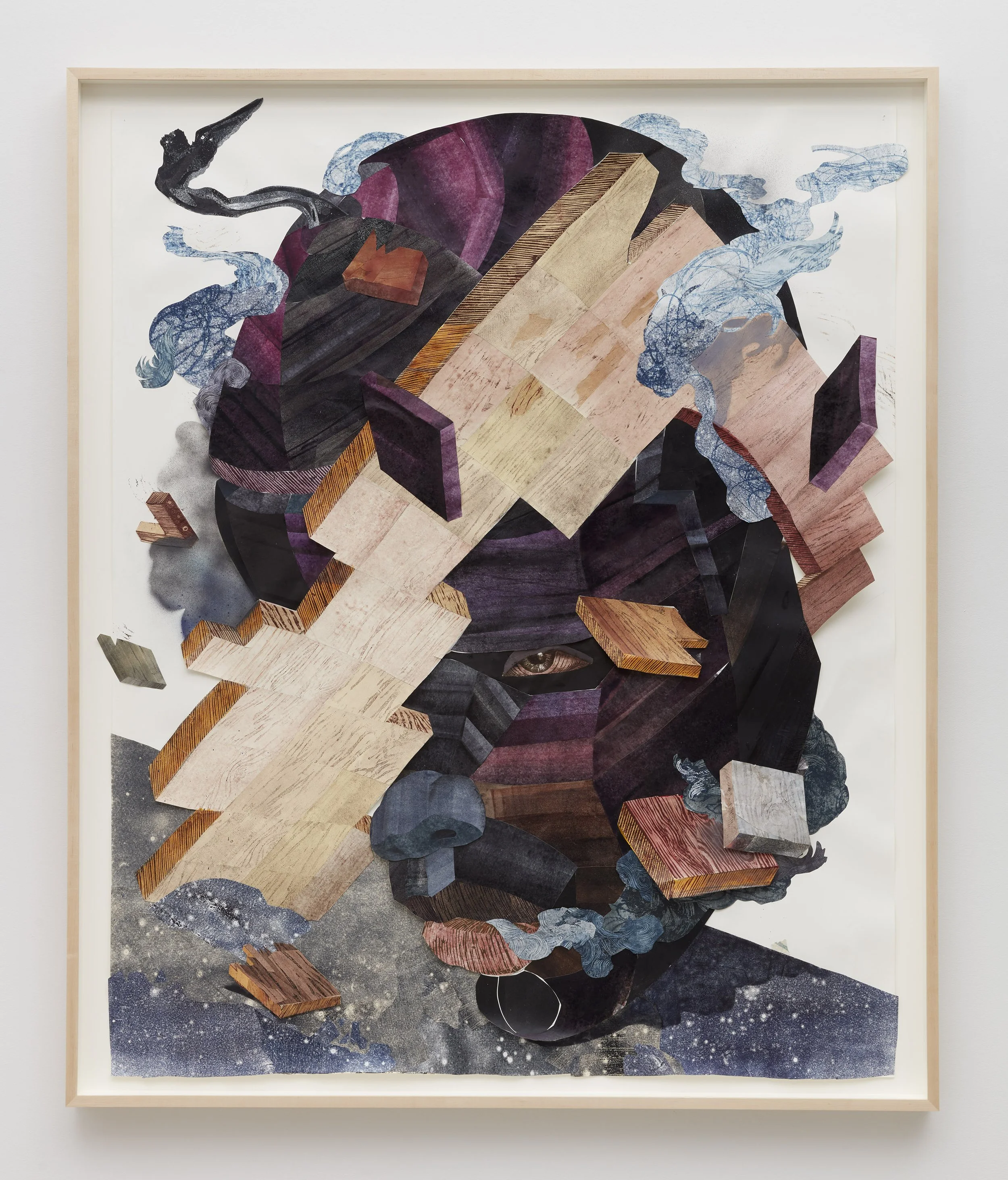
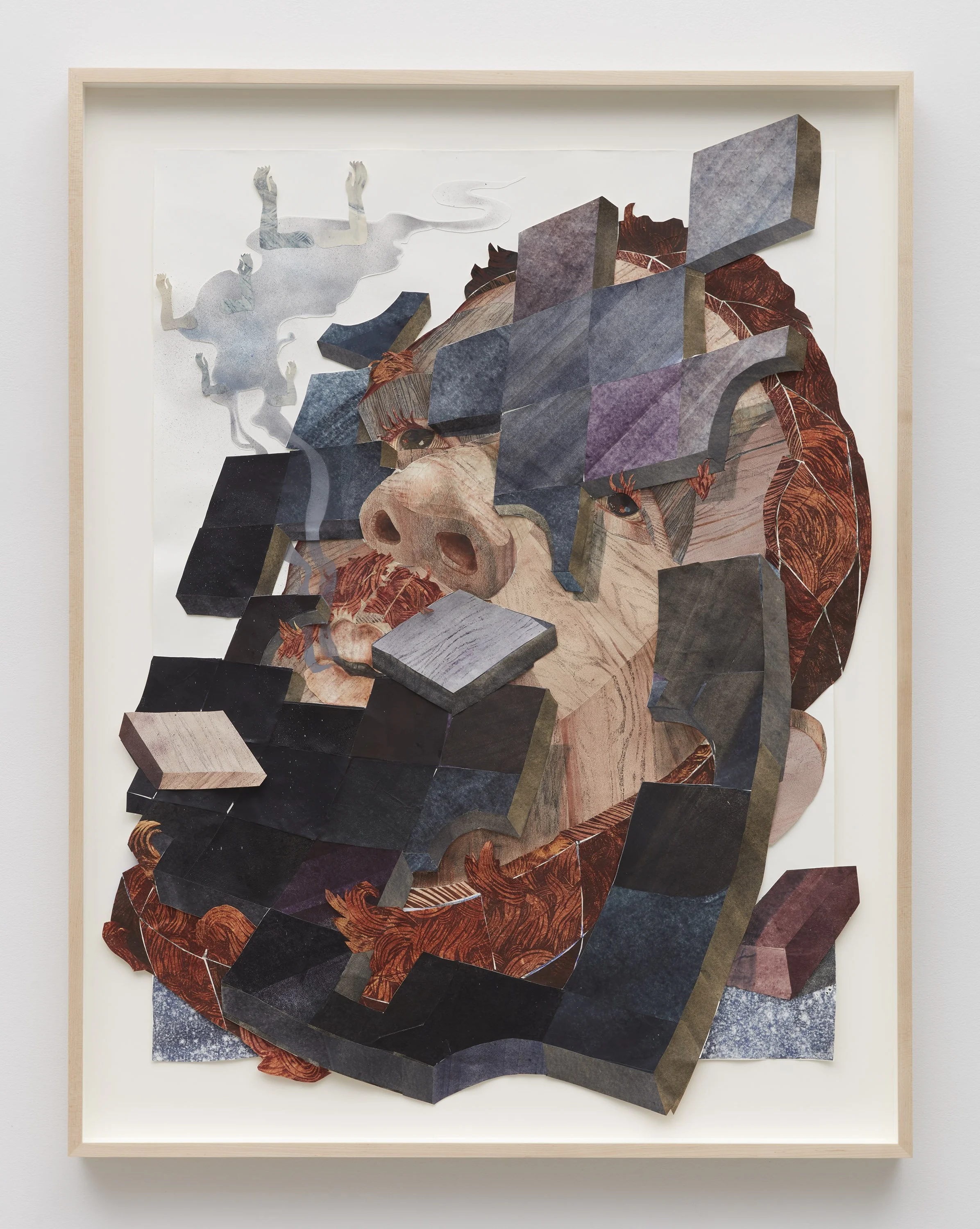
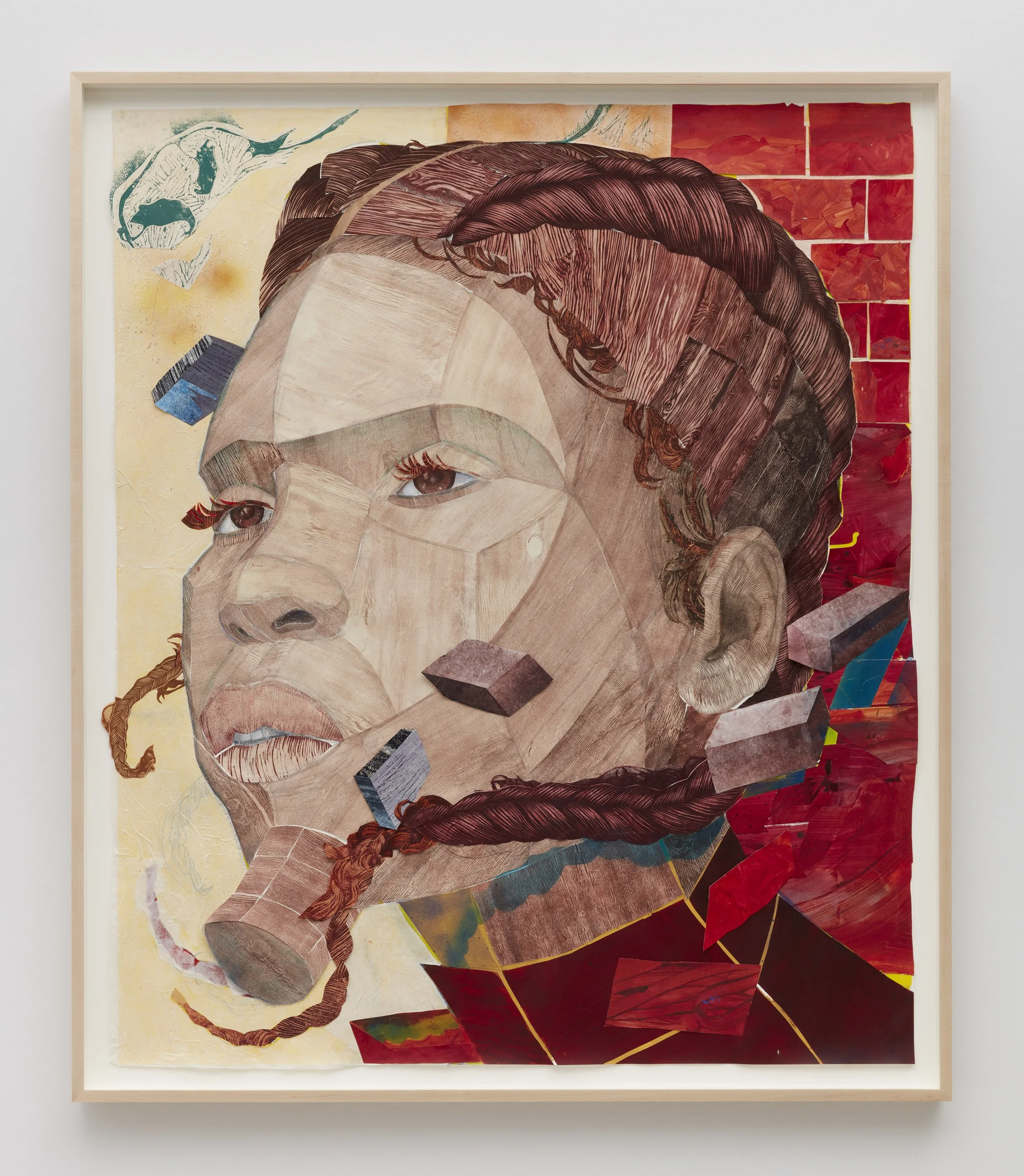
In his practice, Yashua Klos explores how identity—particularly Black identity—is constructed as a means of survival, adaptation, and empowerment. Proposal for a Monument features a selection of recent large-scale woodblock print collages. In this body of work, Klos revisits imagery he first began exploring in 2015, of dimensional portrait busts intersected by grids, planes, wood, and concrete blocks. The integration of building materials and architectural elements into the collages alludes to the built environment, and specifically to the urban area of Klos’s hometown, Chicago—a city indelibly shaped by its signature street grid as well as by legacies of segregation and housing discrimination. The anonymized subjects of Klos’s collages are placed in constant negotiation with the material symbols of these unjust systems, entangled within their wreckage yet at times breaking through or reclaiming it as scaffolding to support the construction of something new.
Klos’s latest body of collages expands upon his earlier explorations of survival strategies to propose presence itself as a monument of resistance. History has shown that monuments, as both structures and symbols, are not infallible; what, Klos asks, might replace them? The exhibition’s title leaves the answer as an open-ended proposal, invoking a framework of monumentality that transcends fixed conditions or static forms. At a moment when Black and brown bodies are increasingly cast out from public space and Black figuration faces a downturn in the contemporary art landscape, Klos envisions a radical “hyper-visibility” of marginalized individuals constructing images in their own likeness.
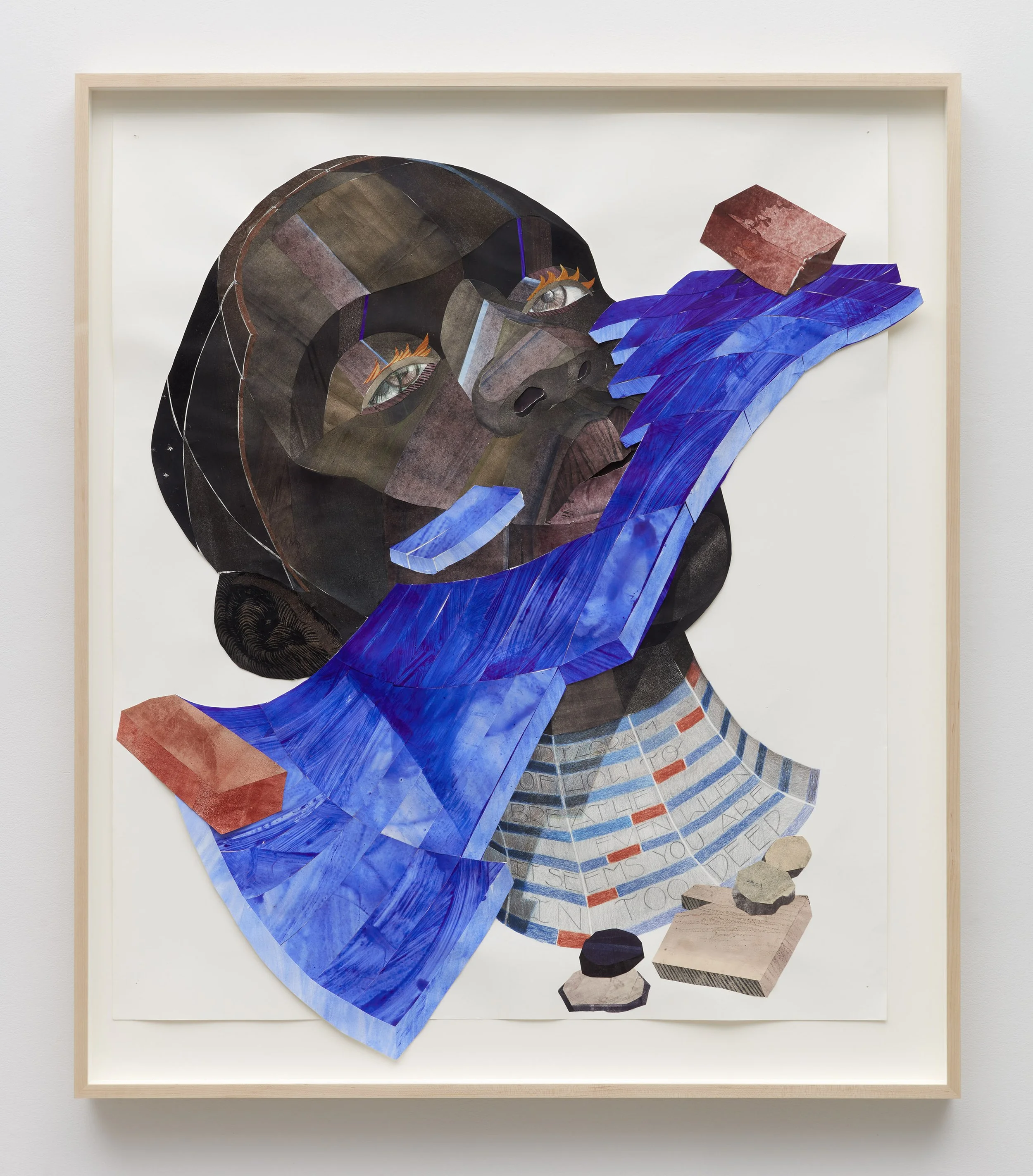
In contrast to traditional monuments that elevate their subjects and messages, Klos’s figures are often shown resting on the ground of the picture plane or suspended in space. They are not singular subjects of historical fame or glory, but amalgamations of the artist’s friends, family, and imagined faces—people who have always and never existed. The incorporation of Egyptian art and regalia, such as the braided beard of Hatshepsut Lives Over Here (2026) and the broad collar of Diagram of How to Breath Even When it Seems You Are In Too Deep (2025), nods to the enduring presence of non-Western civilizations and suggests a continued lineage of monumental self-representation. Part human, part architecture, part detritus, Klos’s proposals embody a monumentality actively assembled and expressed by their represented subjects.
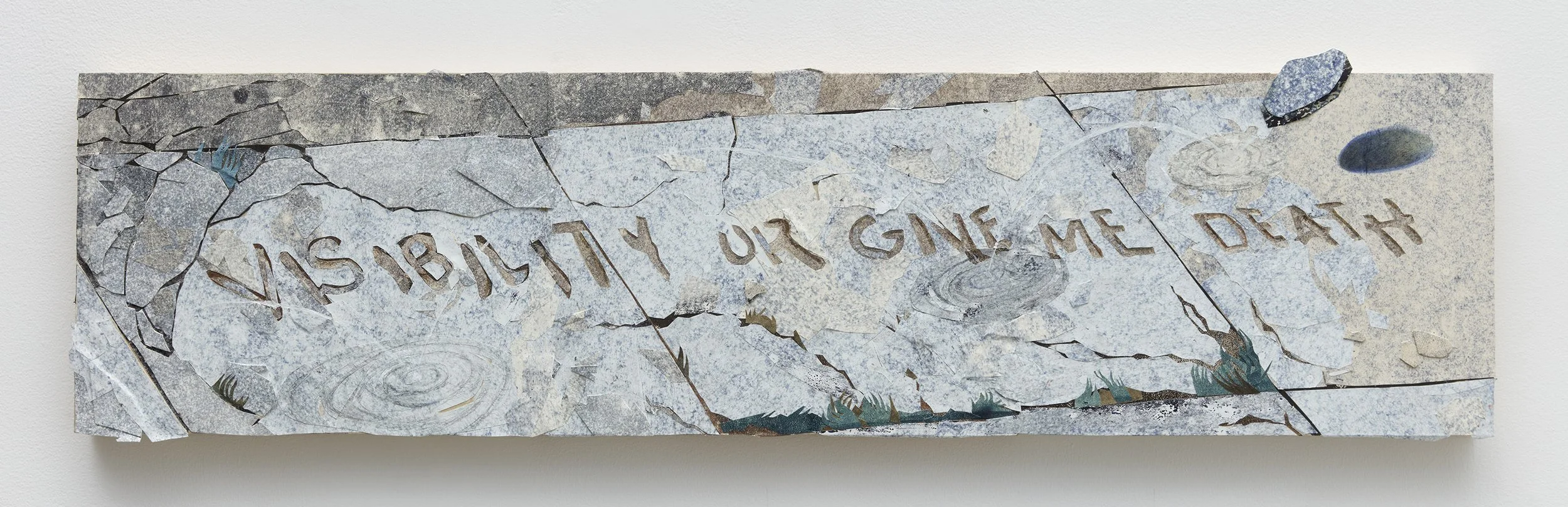
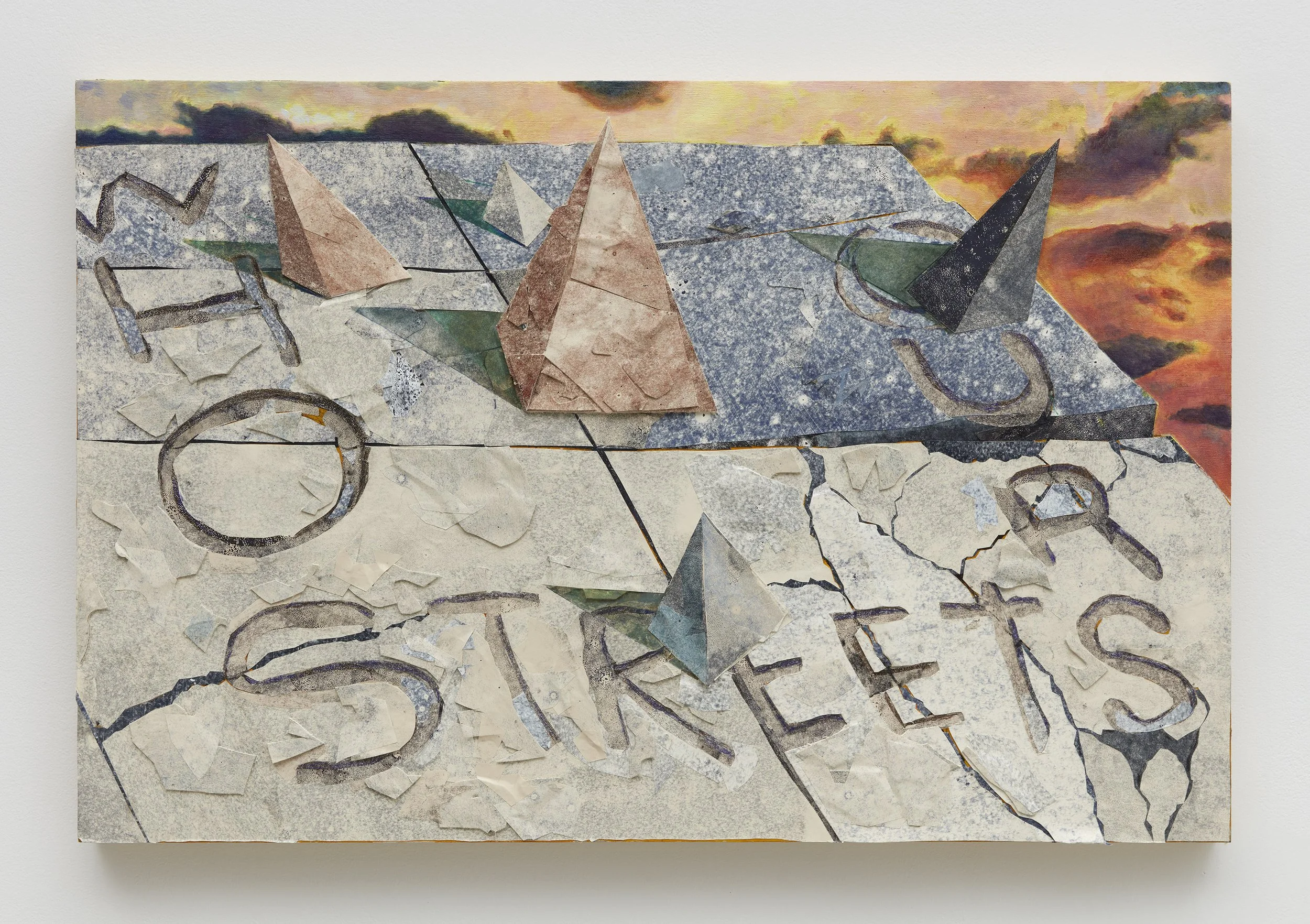
Proposal for a Monument also presents several “sidewalk” collages depicting text or imagery etched onto slabs of pavement. Klos’s representation of the sidewalk links the open, communal function of pedestrian pathways to the optically democratic structure of the grid, in which viewers can enter at any point. Similarly, any person can leave their own permanent mark on the cement sidewalk: a defiant gesture, and a record of existence against an uncertain future. The geometric forms adorning Who’s Streets? (2026) reference the monumental pyramids at Giza, while the titular words transcribe a popular call-and-response slogan—heard during the 2020 protests following the murder of George Floyd in Minneapolis—into a lasting reclamation of space and dignity.
Yashua Klos (born 1977, Chicago, Illinois) received his BFA from Northern Illinois University in DeKalb (2000) and his MFA from Hunter College, City University of New York (2009). Recent exhibitions featuring Klos’s work include Ancestral: Afro-Americas at the Museum of Brazilian Art FAAP (2024); the traveling survey Multiplicity: Blackness in Contemporary Collage, organized by and presented at the Frist Art Museum, Nashville, Tennessee (2023), the Museum of Fine Arts, Houston, Texas (2024), and the Phillips Collection, Washington, DC (2024); and Elegies: Still Lifes in Contemporary Art at the Museum of the African Diaspora, San Francisco, California (2022). The artist’s first major institutional exhibition, Yashua Klos: OUR LABOUR, curated by Tracy Adler, was presented at the Wellin Museum of Art at Hamilton College, Clinton, New York, in 2022.
Klos’s work is included in the public collections of the Bernard A. Zuckerman Museum of Art, Kennesaw, Georgia; the Brooklyn Museum, New York; the Indianapolis Museum of Art, Indiana; the Studio Museum in Harlem, New York; and the Wellin Museum of Art, Hamilton College, Clinton, New York. He has been awarded residencies at the Joan Mitchell Center, New Orleans (2022); the Vermont Studio Center, Johnson, Vermont (2014); and the Bemis Center for Contemporary Art, Omaha, Nebraska (2012). Klos is the recipient of a 2015 New York Foundation for the Arts fellowship and a 2014 Joan Mitchell Foundation grant. He lives in Queens and works in Brooklyn, New York.